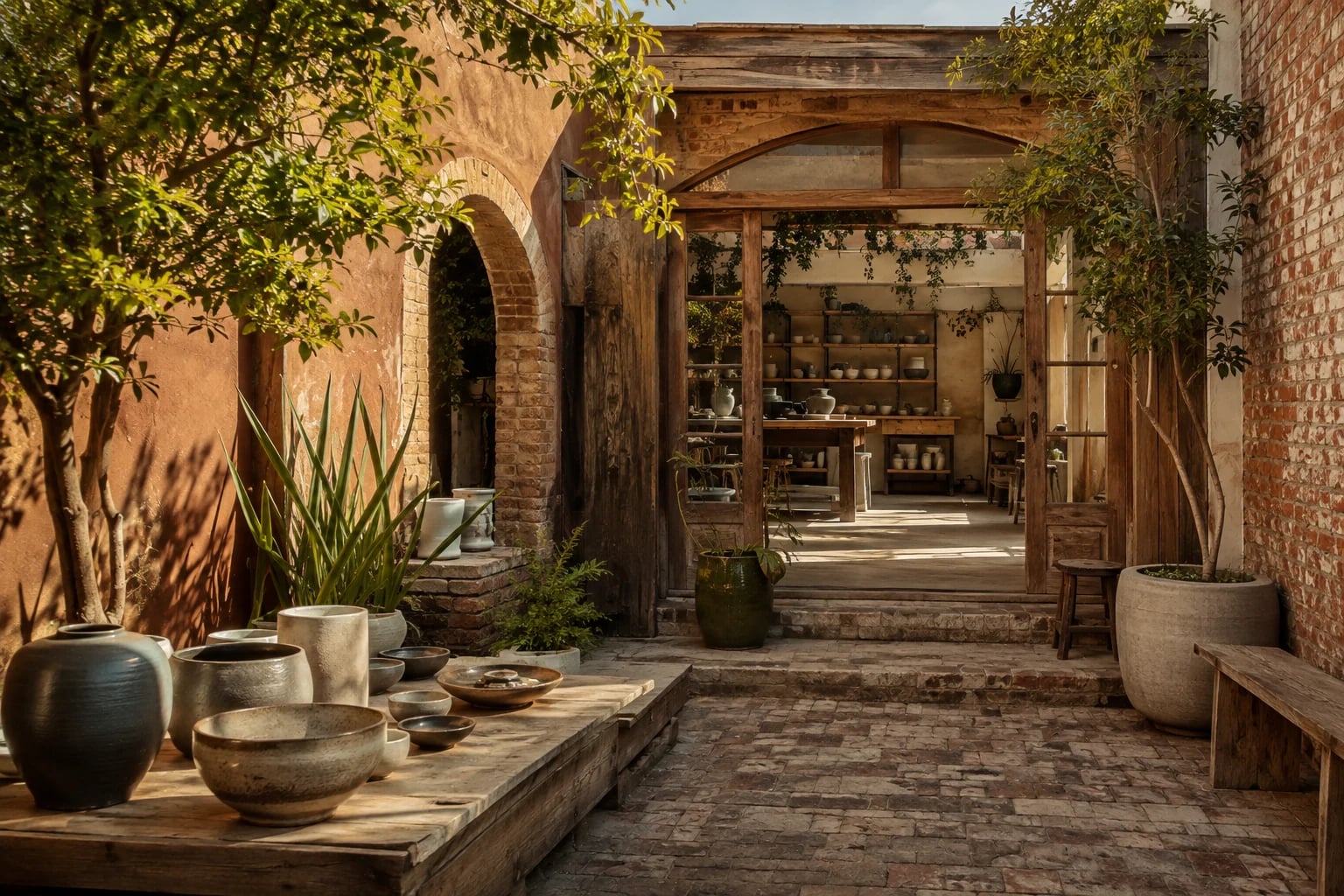
Walk into a good South African restaurant in any of the cities or small towns where the country eats well, and the room will tell you, immediately, that someone cared. The lighting is considered. The music is at the right volume. The menu makes promises the kitchen will keep. The plate, when it arrives, is photographed for no one in particular and looks like it.
Then take out your phone and search for the same restaurant.
Often, the website that shows up has nothing to do with the room. A stock-photo hero. A menu PDF from 2022. A booking widget that opens a third-party platform you don’t fully trust. The font is from a free template. The colour is approximately what the restaurant uses. The story, meaning the actual story, the chef’s biography, the room’s history, the reason the place exists, is either missing or four pages deep.
The room earns one opinion. The website earns another. They are not the same opinion.
Why the gap exists.
It is not because operators don’t care. Most of them care painfully. The gap exists for a small number of structural reasons, and they keep recurring across the industry.
Operators are not buyers of design. A restaurant owner spends their day inside a kitchen, a service, and a payroll. They have no good way to tell a great web designer from a fast one, and the fast one is almost always cheaper.
The web industry tends to under-research hospitality. Many studios that build restaurant sites have never spent a service inside the room they are designing for. They build to a stock template because they don’t know what to ask. The result is a site that loads fine and looks fine and represents the business generically.
Mobile is treated as an afterthought. The country opens menus on a phone, while waiting in line, on a slow connection. A site that was designed on a 27-inch desktop and then ‘responsively scaled’ will pay a tax for that decision every evening of every weekend.
Reservations get handed to a platform. Many restaurants surrender the booking relationship in week one. The traffic, the data, and the email go to a third party that takes a cut. That cut compounds. So does the lost relationship.
Photography is the last thing in the budget. A restaurant whose food is photographable as a matter of routine often shows up online with phone-snapshot images and a single staff portrait. The visual asymmetry between the room and the screen is the most expensive part of the gap.
What closes the gap.
The fix is not exotic, and it is not even that expensive relative to the cost of being misread for a year. It is a small number of decisions, made deliberately:
- Treat the website as part of the room, not as marketing.
- Design and build mobile-first, with the desktop as a courtesy.
- Bring the photography forward in the budget, not backward.
- Keep the booking flow inside the brand wherever possible.
- Write the menu copy with the same voice the host uses at the door.
- Hand the operator analytics they can actually read in five minutes.
None of these are tricks. They are the basics. The fact that they are not the default for South African restaurant websites in 2026 is exactly the gap, and exactly the opportunity.
Why this matters at the country scale.
South African hospitality is a national export. The traveller’s first impression of the country, for many travellers, will be a restaurant website opened on a phone in a hotel room or at an airport gate. Multiply that across thousands of independent venues, and the cost of "fine, not great" web presence becomes a cost the country pays.
Closing that gap, restaurant by restaurant, lodge by lodge, estate by estate, is part of what we mean when we say we build the digital infrastructure of South Africa. It is the bit you can see.